XN(XN6E)-A-DTLS-300x300.jpg)
-300x300.jpg)
-300x300.jpg)
XN(XN4ES)-Z珊瑚红-300x300.png)
-300x300.jpg)
-300x300.jpg)
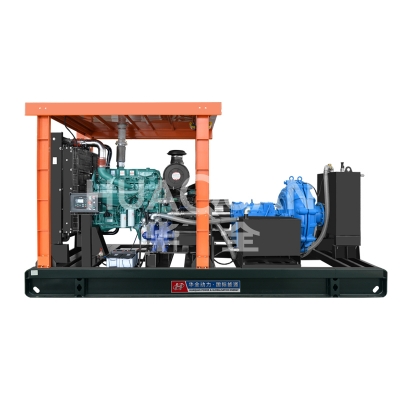


Safeguarding the Lifeline of Financial Power Supply—The Unseen Contribution and Full-Process Assurance of Bank Generator
When the city grid suddenly goes down, the lights in bank branches remain bright, ATMs dispense cash normally, and servers in the backend data center operate smoothly—customers' transfers and deposits proceed without a hitch. Behind this seamless operation, bank generators stand guard silently. As indispensable core emergency equipment in the financial sector, bank generators have long transcended the role of ordinary backup power sources. They serve as the “invisible guardians” safeguarding fund security, ensuring business continuity, and maintaining customer trust, bearing the vital mission of sustaining the stable operation of the modern financial system.
I. Bank Generators
Bank generators are core emergency backup power sources tailored to the specific needs of the financial industry, designed to address unexpected situations such as utility power outages and equipment failures. Their primary function is to ensure uninterrupted 24/7 power supply for all critical banking operations—including bank lobbies, ATMs, data centers, and cash vaults—safeguarding fund security, business continuity, and customer trust. Unlike standard industrial generators, they feature high stability, rapid response, and precise power matching, serving as the “invisible defense line” for the smooth operation of modern financial systems.
II. Huaquan: Professional Manufacturer of Bank Generators
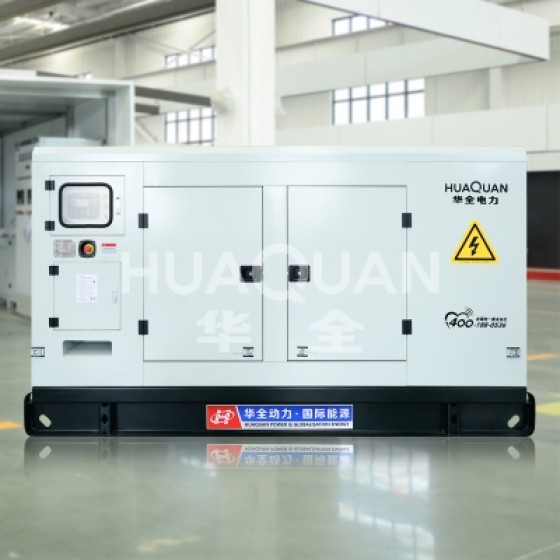
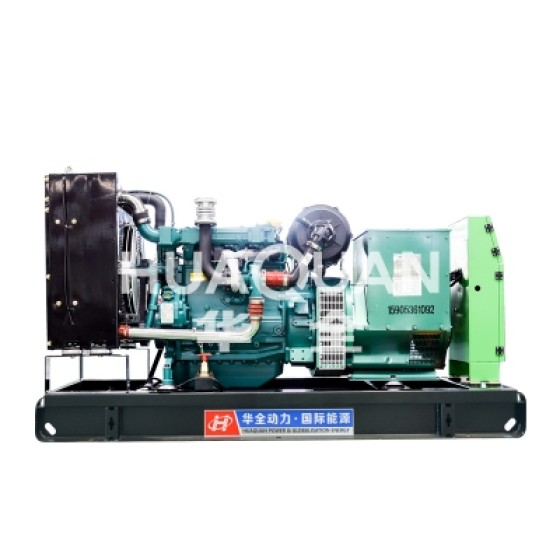
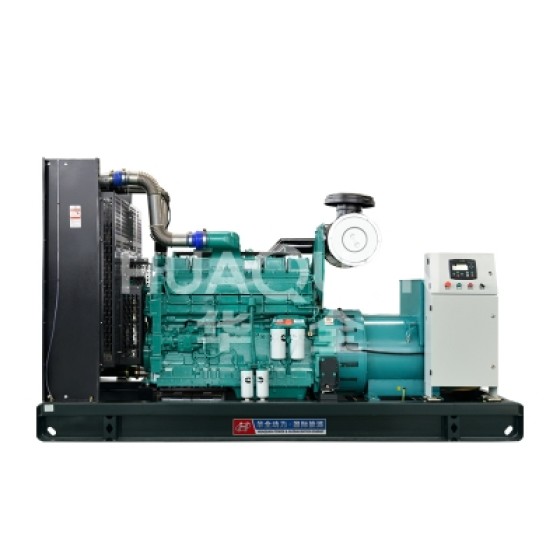
With years of deep expertise in the banking emergency power supply sector, Huaquan is a specialized manufacturer dedicated to the R&D, production, customization, and full lifecycle services of bank generators. Centering on the stringent power supply requirements of the financial industry, we develop high-quality emergency power solutions tailored for diverse banking scenarios. Leveraging strategic partnerships with globally renowned enterprises, Huaquan's banking generators incorporate premium components such as all-copper brushless motors and automated control systems. Our comprehensive product line spans from compact models for neighborhood branches to high-power units for data centers, featuring rapid start/stop capabilities, quiet operation, environmental friendliness, intelligent monitoring, and high stability. These generators precisely meet the critical needs of bank data centers, business halls, cash vaults, and other core scenarios. Supported by an after-sales network spanning over 300 cities and a remote operation and maintenance cloud platform, Huaquan provides customized solutions and 24/7 rapid response services, comprehensively helping banks fortify their emergency power supply defenses.
III. The Critical Importance of Bank Generators
The unique nature of the financial industry dictates an exceptionally stringent requirement for power supply in banks, which is precisely what distinguishes bank generators from ordinary industrial generators.
As pivotal hubs for capital flow and data storage, banks face potentially incalculable losses from even a single second of power interruption: business system failures halt transactions, while lost customer deposits or transfer data may trigger financial disputes; ATM outages disrupt public access to cash, damaging banking service reputation; data center blackouts risk destruction of core accounting information, potentially threatening regional financial stability. From headquarters data centers to community branch offices, from cash vaults to security surveillance systems, all critical operations demand 24/7 uninterrupted power supply. Bank generators thus serve as the “last line of defense” against unexpected events like grid failures or equipment malfunctions, fortifying financial services with a robust security barrier.
IV. Selection of Bank Generators
Unlike backup power sources for ordinary settings, the selection of bank generators adheres to nearly exacting standards. Every parameter and function must align with the bank's specific requirements, embodying the professionalism of “custom-tailored” solutions.
1. Precision in Power Matching
This requires scientific calculation based on branch scale and load type: small community branches or remote locations: A 55kW generator suffices for ATMs, security equipment, and basic service terminals. Large branches and regional headquarters require 70kW+ models, while head office data centers often necessitate multiple 900kVA-class high-power units operating in parallel. An N+X redundant design ensures stable load supply while minimizing the risk of single-unit failure.
2. Performance Stability and Rapid Response Capability
Bank generators must be equipped with AMF (Automatic Mains Failure) functionality and ATS (Automatic Transfer Switch) to automatically start within 3-10 seconds after mains power interruption and achieve steady-state operation within 30 seconds. This forms a triple-redundant “mains-UPS-generator” power supply system, ensuring zero power interruption and preventing core equipment damage caused by UPS battery over-discharge.
3. Noise Reduction and Environmental Protection
This is also a critical requirement. As bank branches are often located in residential areas or office buildings, generators must feature a double-layered soundproof enclosure design, with noise levels controlled between 65-75dB at 7 meters. They should also meet an IP22 or higher protection rating and emit low exhaust emissions. Suitable for diverse deployment scenarios such as basement machine rooms and rooftop equipment areas, these generators ensure they neither disrupt branch operations nor violate environmental regulations.
V. FAQs on Bank Generators
1. Are bank generators different from standard industrial generators?
Bank generators prioritize high stability, rapid responsiveness, and precise compatibility to meet financial sector requirements for zero power interruptions, low noise, and environmental compliance. Standard industrial generators focus more on power output, with relatively relaxed standards for response speed and noise reduction.
2. What protective measures should be taken for long-term shutdown of bank generators?
Fuel protection: Seal fuel tanks to prevent moisture absorption and fuel degradation; consider adding fuel stabilizers.
Battery protection: Remove batteries for separate storage; periodically recharge to prevent damage from deep discharge.
Unit Moisture Prevention: Clean dust and debris from the unit's surface. Close all doors and windows in the generator room. Place desiccants inside. Periodically start the unit (once per month, running for at least 30 minutes each time) to maintain normal operating conditions and prevent component rusting or seizing.
3. What are the development trends for bank generators amid financial digital transformation?
Intelligentization: Equipped with remote monitoring and smart diagnostics to enable precision maintenance, unmanned operation, and timely detection of equipment hazards;
Efficiency enhancement: Optimized unit structure to boost power generation efficiency, reduce fuel consumption, and lower operational costs;
Environmental sustainability: Integrating new energy technologies to establish a hybrid backup system combining diesel generators with renewable power sources, further reducing exhaust emissions and aligning with green development requirements.
VI. Application Scenarios for Bank Generators
1. Core and Disaster Recovery Centers: Ensures uninterrupted operation of core servers, storage, and network equipment to prevent systemic risks such as transaction interruptions and data loss.
2. Critical Business and Operational Sites: Guarantees continuous functioning of business monitoring, dispatch, and customer service (especially emergency services) under all circumstances.
3. Cash and Valuables Processing Centers: Ensure power supply to security systems (access control, surveillance, alarms) to prevent security breaches and operational disruptions caused by power outages.
4. External Service Outlets: Maintain core business terminals, ATMs/CRSs, and other self-service equipment to sustain essential financial services.
5. Critical Payment Clearing Nodes: Safeguard the stability of payment, clearing, and settlement systems to avert systemic financial risks.
Bank generators, seemingly cold pieces of electrical equipment, actually carry the vital mission of safeguarding customer trust and maintaining financial stability. They bear witness to the iterative development of the financial industry, while providing stable and reliable power to protect every transaction, every deposit, and every service. Within the modern financial ecosystem, bank generators have long transcended their role as mere backup power sources. They have become indispensable “cornerstones of security,” the unseen guardians safeguarding the lifeline of financial power supply and underpinning the high-quality development of the financial sector.
-XN(XN4F)-WT1A-DTLQ/正视中国制造网-560x560.jpg)