XN(XN6E)-A-DTLS-300x300.jpg)
-300x300.jpg)
-300x300.jpg)
XN(XN4ES)-Z珊瑚红-300x300.png)
-300x300.jpg)
-300x300.jpg)


Daily Maintenance Guide for Container Generators
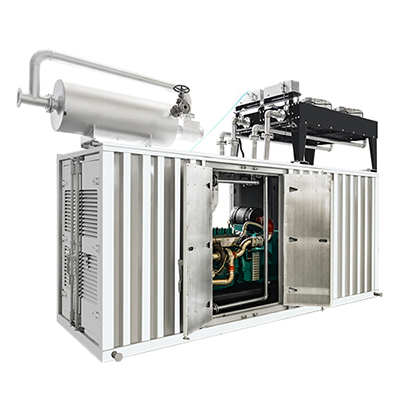
Container generators serve as core equipment for emergency power supply, remote area electricity provision, and industrial production backup power. Their stable operation directly impacts the reliability of power supply. Due to prolonged operation within enclosed container environments and frequent exposure to complex working conditions, scientific daily maintenance not only extends equipment lifespan but also reduces failure rates, preventing losses caused by unexpected shutdowns.
I. Container Generator
Container generator systems involve high-voltage electricity, rotating machinery, and fuel. Any improper operation may result in personal injury or equipment damage. Safety is the foremost principle during maintenance. Maintenance must be performed only when the equipment is completely shut down and power is disconnected. Simultaneously, the ultimate goal of maintenance is to ensure reliability. Through preventive maintenance, minor issues can be addressed before they escalate, preventing sudden shutdowns, unstable output, and other operational failures during operation, thereby guaranteeing uninterrupted power supply.
II. Huaquan: Professional Container Generator Manufacturer
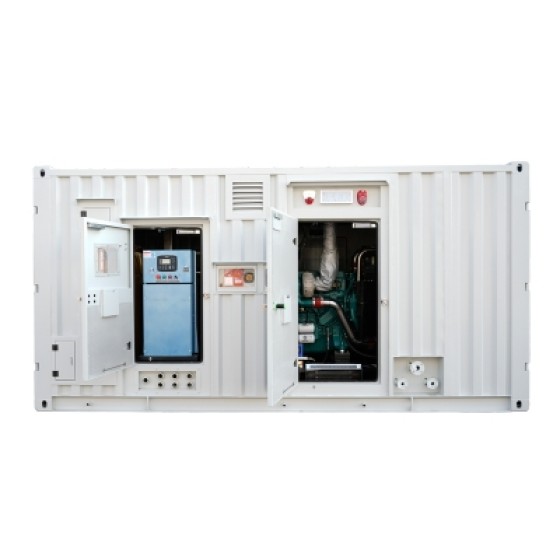
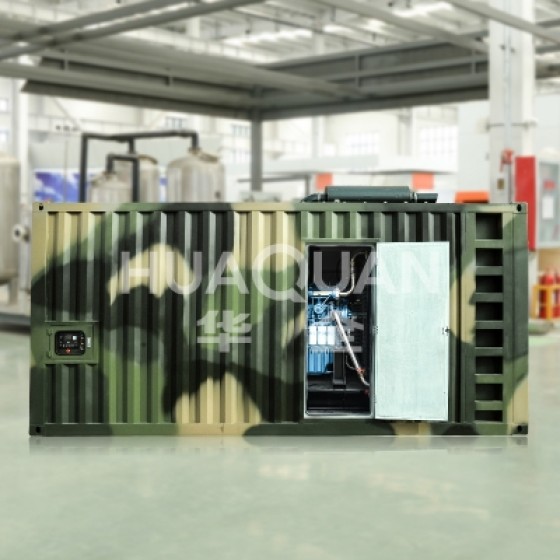
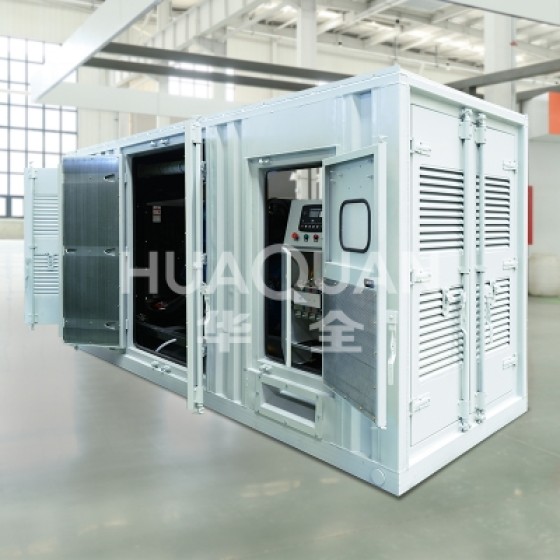
Huaquan, as a professional container generator manufacturer, leverages its deep technical expertise and rigorous quality control system to specialize in the R&D, production, and customized services of container generators. Its products integrate core advantages such as silent operation, efficient heat dissipation, and robust sealing protection. Certified by multiple international standards, they are adaptable to diverse and complex scenarios including emergency power supply, remote mining sites, and data centers, providing stable and reliable power solutions for global users.
III. Daily Maintenance of Container Generators
1. Pre-Startup Inspection: Establishing the First Line of Defense for Safe Operation
Ensure no debris surrounds the container, ventilation openings are clear, and there are no signs of oil, water, or gas leaks.
Check the control panel for any alarm indicators and verify all gauges display normal readings.
Visually inspect whether the engine oil and coolant levels are within the normal range.
2. Operational Monitoring: Real-time tracking of equipment status
During operation, conduct continuous monitoring through visual inspection, auditory checks, odor detection, and measurement to promptly identify and address anomalies, preventing fault escalation.
Ensure rotational speed remains stable at rated value, with voltage and frequency meeting power supply specifications (e.g., 380V/50Hz), and fluctuations not exceeding 5%.
Engine oil pressure must not fall below 0.2MPa (35PSI when cold), and water temperature must be maintained below 95°C to prevent engine overheating.
Exhaust smoke should appear light gray. Immediately shut down and investigate if black smoke (indicating potential overload or clogged filters), blue smoke (oil burning), or white smoke (coolant leakage) is observed.
Listen for abnormal sounds during operation, such as metal clanging or unusual noises. If vibration intensifies, inspect anchor bolts and component fastenings.
Inspect for oil, water, or air leaks; address any issues promptly.
Avoid sudden load increases or decreases. Never overload or operate asymmetrically. Maintain normal loads at 70%-80% of rated power to optimize fuel efficiency and minimize component wear.
3. Post-Shutdown Procedures: Complete Maintenance and Documentation
Shutdown does not mark the end—proper closure lays the groundwork for the next operation while establishing maintenance records for traceability.
First, disconnect all loads and allow the generator to run idle for 3-5 minutes. Only shut down after water and oil temperatures return to normal ranges to prevent component damage from sudden shutdown at high temperatures.
For extended shutdowns (over 30 days): Disconnect the battery negative terminal. Drain fuel or add fuel stabilizer. Fill coolant and add antifreeze. Change engine oil. Cover equipment with waterproof tarps. Rotate crankshaft weekly to prevent component seizure.
Clean the equipment surface, radiator, filters, and other components. Remove debris from the container and maintain a dry, tidy environment.
Maintain detailed records of operating hours, load conditions, fuel consumption, instrument readings, and any anomalies to provide a basis for subsequent scheduled maintenance.
4. Regular Tiered Maintenance: Implementing Thorough Maintenance by Cycle
Develop a tiered maintenance plan based on equipment operating hours and cycles to precisely replace components and identify potential hazards. Refer to NFPA 110 guidelines and manufacturer requirements. Core cycles and tasks are as follows:
Short-Term Maintenance (Weekly/Every 50-100 Hours):
Clean or replace air filters (for paper elements, blow compressed air inward-to-outward; replace if damaged);
Drain water and sediment from fuel tanks and fuel filters; clean water filters;
Check battery voltage and terminal condition; top up with distilled water (for non-maintenance-free batteries);
Tighten all component screws; inspect and adjust belt tension.
Mid-Term Maintenance (Monthly/Every 200-500 Hours):
Replace engine oil (more thorough when engine is warm), oil filter, and fuel filter;
Inspect cooling system hoses and fittings for aging, add coolant or DCA additive;
Test automatic start/stop functions and safety protection systems (e.g., overload, short-circuit protection) to ensure reliable operation;
Check generator insulation resistance to identify leakage risks.
Long-Term Maintenance (Annual/Every 1000-2000 Hours):
Completely replace coolant, flush radiator and cooling system to remove scale and contaminants;
Inspect turbocharger blade wear, adjust engine valve clearance and injection timing (performed by qualified personnel);
Replace carbon brushes in brushed motors (when worn to one-third of original length), clean internal connectors on control panels and address oxidation issues;
Conduct load bank testing to verify equipment performance under rated load and prevent wet stacking.
IV. Safety and Special Scenario Considerations for Container Generators
1. Core Safety Protocols
Before maintenance, disconnect the main power supply and hang a “DO NOT OPERATE” sign to prevent electric shock hazards;
Diesel fuel and engine oil contain benzene and lead. Avoid ingestion or inhalation during operation. Exhaust gases must be promptly vented. Prohibit prolonged operation in enclosed spaces.
Never open the radiator or heat exchanger pressure cap while the unit is running. Maintenance must only be performed after the unit has cooled and pressure has been fully released.
Foam extinguishers are prohibited for electrical fires. Use only specialized fire extinguishers.
2. Special Environment Adaptation
Seaports, dusty environments: Shorten air filter and radiator cleaning cycles; enhance sealing protection to prevent salt spray and dust corrosion of components.
Seasonal Transitions:
Winter: Switch to -10°C or -20°C low-pour-point diesel fuel; verify coolant freezing point.
Summer: Enhance ventilation and heat dissipation; clear radiator of cottonwood fluff and dust to ensure cooling efficiency.
High-Load Scenarios:
If operating consistently at 80% above rated power, reduce maintenance intervals by 50%. Prioritize inspections of oil quality, filter elements, and component wear.
V. FAQs About Container Generators
1. What should be done if a container generator emits black smoke during operation?
First reduce the load to observe if the issue subsides. If ineffective, immediately shut down the generator for troubleshooting:
Check the air filter; if clogged, clean or replace it;
Verify fuel quality and drain accumulated water and sediment from the bottom of the fuel tank;
Inspect the atomization effect of the fuel injectors and adjust the fuel injection timing angle if necessary;
If black smoke persists, have a professional inspect the turbocharger and carbon buildup in the combustion chamber.
2. How to protect container generators in a seaport salt spray environment?
Reduce air filter and radiator cleaning cycles to half the standard frequency to prevent salt spray corrosion of components;
Use stainless steel for all exposed bolts, hinges, etc., or apply rust inhibitor regularly;
Inspect container sealing gaskets to ensure seawater and rainwater ingress protection remains intact; add salt spray filtration devices if necessary;
Regularly test electrical component insulation resistance to prevent leakage.
3. How to determine if the cooling system of a container generator is functioning properly?
Check parameters: Water temperature remains stable below 95°C. At 1000m altitude and 40°C ambient temperature, the generator still delivers 100% output power, indicating normal cooling.
Check the condition: The radiator surface should be free of dust or cottonwood fluff blockages. Air inlets and outlets must remain unobstructed, with no coolant leaks. Fan start/stop frequency should align with operating conditions, indicating the cooling system is functioning well.
VI. Application Scenarios for Container Generators
1. Critical Facilities (Emergency Backup): For instance, a power outage at a data center could cause global service disruptions, while interrupted financial transactions would result in significant losses. Silent container generators typically serve as the “last line of defense,” integrating with UPS, ATS, and other systems to ensure seamless switching. Their reliability and startup speed are paramount considerations.
2. Remote Development Sites (Primary Power Source): In mining operations or offshore platforms where grid infrastructure is prohibitively expensive, container generators are the sole economical solution. They demand exceptional durability, fuel efficiency, and resilience against harsh climates. Multiple units are often paralleled to form small power stations, enabling redundancy and load management.
3. Flexible Operations (Mobile Power): For film shoots or music festivals, power demands are “on-call.” Container generators excel through standardized transport (via truck, ship, or even helicopter hoisting) and rapid deployment—simply connect wiring upon arrival for unmatched flexibility.
In summary, the daily maintenance of container generators must adhere to the principle of “prevention-oriented, full-process control,” integrating pre-startup inspections, operational monitoring, post-shutdown procedures, and regular tiered maintenance. Simultaneously, strict compliance with safety regulations and adjustments to maintenance details based on the operating environment are essential to maximize equipment performance, extend service life, and ensure uninterrupted power supply during critical moments.